Surgery or Non-Invasive? How to Choose the Right Approach for Loose Skin
Loose or lax skin is one of the most common aesthetic concerns — and the right solution depends on how much excess skin is actually present. Mild to moderate laxity responds well to non-invasive treatments such as radiofrequency microneedling and skin tightening treatments. Significant, redundant skin may require a surgical approach. A clinical consultation is the only reliable way to determine which route is appropriate for you.
Loose or lax skin — whether following significant weight loss, pregnancy, or simply years of gravity and sun exposure — is one of the most frequently raised concerns in aesthetic consultations, and one of the most misunderstood. The honest answer to “surgery or non-invasive?” depends almost entirely on how much excess skin is actually present, not on personal preference alone.
What Counts as “Loose Skin”?
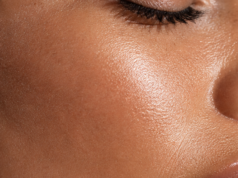
There is a meaningful difference between skin that has lost some elasticity and firmness, and skin that has become genuinely redundant — hanging tissue that will not retract regardless of treatment. The first responds well to non-invasive approaches; the second, realistically, does not. Skin quality, age, genetics, and how quickly weight was lost all influence which category someone falls into.
When Non-Invasive Treatments Make Sense
Mild to Moderate Laxity
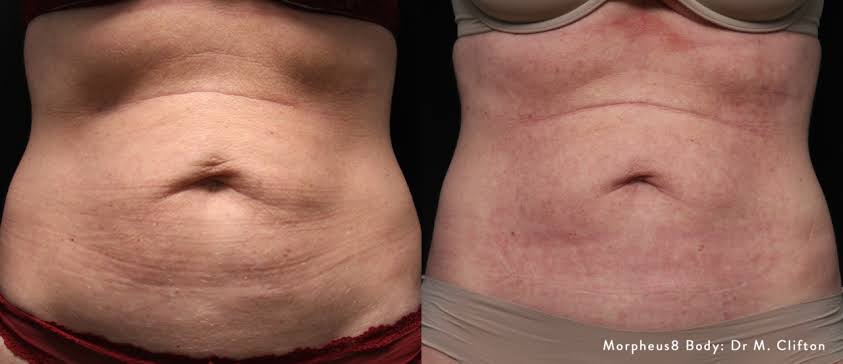
For skin that is loose but still retains some elasticity, energy-based skin tightening treatments can stimulate new collagen production and visibly firm the skin over a course of sessions. Treatments such as 3D radiofrequency microneedling — which combines microneedling with radiofrequency energy delivered deep into the dermis — trigger the body’s natural healing response to boost collagen production and improve skin texture and tone. Results are gradual and proportional — a genuine improvement, not a transformation — and typically require a course of treatments rather than a single visit.
Radio frequency microneedling is particularly effective for mild facial and body laxity, as it works across both the deep dermis and epidermis simultaneously. For those seeking a non-surgical lift with natural-looking results, a thread lift or non-surgical facelift using hyaluronic fillers and liquid facelift techniques can restore structure and volume where it has been lost.
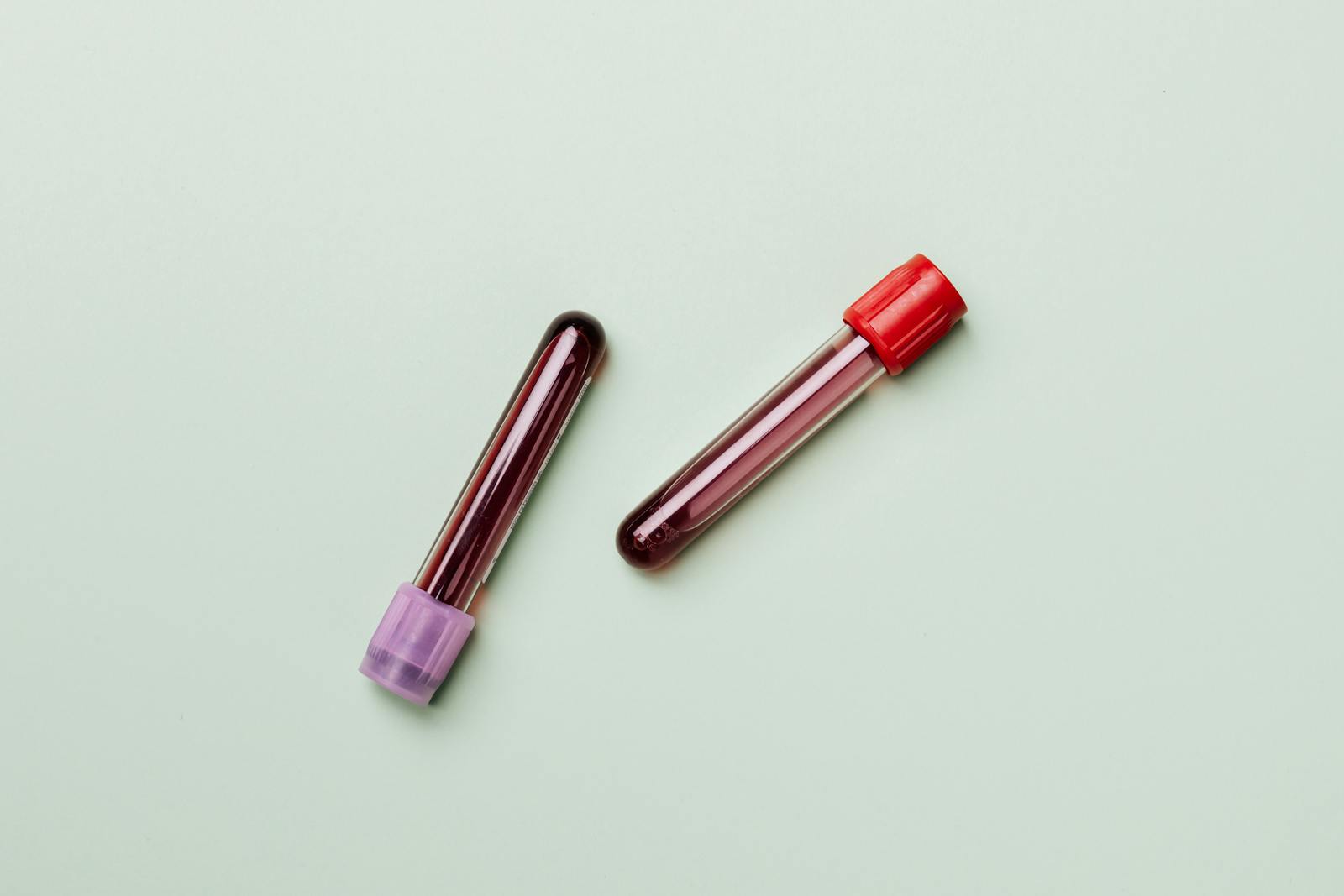
Skin rejuvenation treatments including polynucleotides, skin boosters, exosomes / puresomes, and PRP therapy / vampire facial can all support skin quality improvements during this phase, helping to thicken the dermis, improve hydration, and stimulate elastin. Polynucleotide injectables in particular have a well-evidenced role in skin regeneration and can work well alongside energy-based devices for a more comprehensive result.
Post-Weight-Loss Skin, Early On
Skin retraction after weight loss can continue for a year or more, particularly when weight has come off gradually — a pattern that has become more common as weight loss injections / Mounjaro have driven demand for skin tightening at a faster rate and larger scale than before. Many clinicians recommend a waiting period, supported by non-invasive treatments, before any surgical decision is made.
During this period, microneedling and 3D radiofrequency microneedling can help improve skin texture and firmness while the body continues to adapt. A structured skin care routine — developed with clinical input and including hyaluronic acid products and daily sun screen — supports the skin’s resilience throughout this waiting phase.
When Surgery Is the Realistic Answer
Once skin has lost significant structural elasticity — commonly after substantial or rapid weight loss — no non-invasive device can remove the excess tissue itself; it can only support the skin that remains. In these cases, surgical body contouring becomes the realistic route to removing redundant skin rather than simply tightening what is there. Recovery is longer and the decision carries real surgical risk, which is exactly why it should be reserved for cases that non-invasive options genuinely cannot address.
It is worth noting that treatments such as laser skin tightening and laser skin tightening without numbing may still play a supportive role before or after a surgical procedure — for improving surface texture, targeting pigmented lesions, or managing redness — but they are not a substitute for surgery when significant excess skin is present.
Supporting Skin Quality Throughout
Whether the treatment plan is non-invasive, surgical, or a combination of both, skin quality matters at every stage. Injectable treatments such as anti-aging injections and botox injections can address fine lines and muscle movement in areas where laxity is less structural, while wrinkle reduction treatments complement skin tightening for a more complete result.
For skin texture concerns such as enlarged pores, pigmentation, or rough tone — common alongside laxity — chemical peels, facials and peels, hydrating facials, and prescription-grade facials can support overall skin health and radiance. Medical grade peels sourced through reputable suppliers offer clinically evidenced results when used as part of a structured programme.
A personalised skin care routine — including hyaluronic acid products and daily SPF — remains a non-negotiable foundation at every stage of treatment.
How to Decide
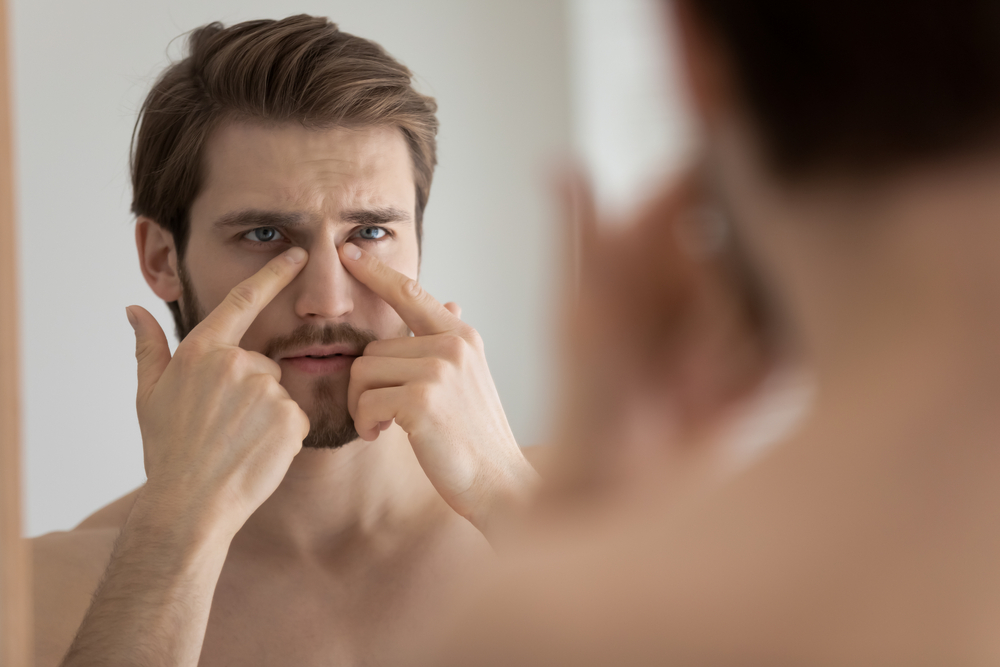
This is a decision for a consultation, not a guess in the mirror. A qualified practitioner can assess skin elasticity, the degree of excess tissue, and your overall goals, then recommend accordingly. Sometimes a non-surgical facelift or a course of skin tightening treatments is genuinely sufficient. Sometimes it is not — and being told that honestly, upfront, saves time, money, and disappointment.