Patients rarely see what happens before a treatment reaches the treatment room — the sourcing, licensing and product selection that separates a properly run clinic from one cutting corners. Here’s a look at what’s actually behind the door of a well-stocked aesthetics fridge, and why the sourcing matters as much as the treatment itself.
Regenerative injectables
Rejuran and its clinic-use counterpart Rejuran I have become staples in regenerative protocols, alongside newer entries like Aesthefill and Mesoestetic Fast Skin Repair, which practitioners increasingly combine post-procedure to support faster, more even healing.
Fillers practitioners actually reach for
Beyond the household names, Nexfill and fine-gauge options such as Teosyal Redensity 1 get requested specifically for delicate areas, while Restylane’s wider range remains a go-to for practitioners wanting a well-documented, predictable product family across multiple facial areas.
Toxins and the licensing that matters
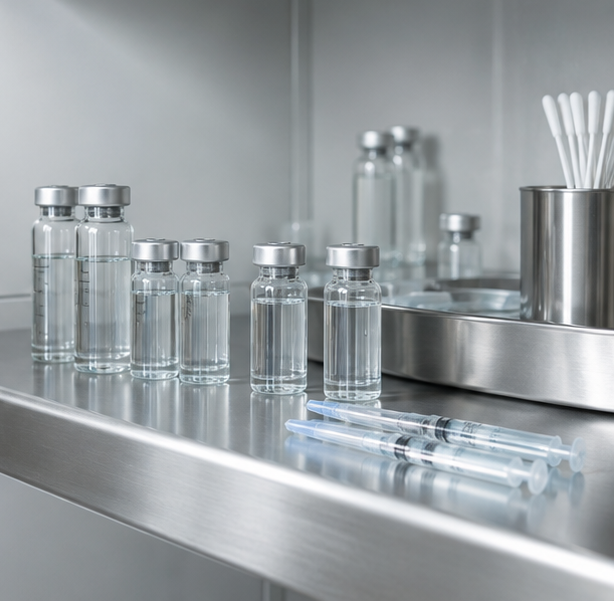
Azzalure and newer entrants like Relfydess are only as good as the supply chain behind them — diluents for injections and the overall aesthetic consumables a clinic sources need to come from a licensed pharmaceutical wholesaler, not a grey-market reseller, regardless of how convincing the pricing looks.
The unglamorous essentials
Medical grade peels and wholesale dermal fillers rarely get the social media attention that a finished result does, but they’re exactly where a well-run clinic and a corner-cutting one diverge — and it’s usually invisible to the patient until something goes wrong.
Why this matters to you as a patient
None of this is something a patient can verify by eye, which is exactly why asking a clinic where they source their products from — and getting a straight answer — is one of the more useful questions in any consultation.