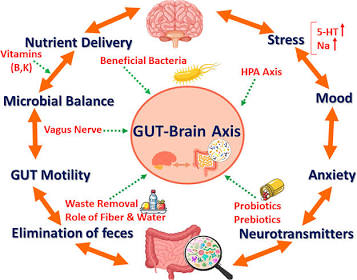
The gut microbiome does far more than aid digestion. It produces mood-regulating chemicals, metabolises oestrogen, and communicates directly with the brain via the gut-brain axis. Chronic stress disrupts this system, affecting everything from energy to libido. Supporting your gut through diet, sleep, and stress management can have wide-reaching effects on how you feel.
Most people think of the gut as a digestive organ. It is — but it also acts as a hormonal regulator, a mood influencer, and a key player in intimate health. The research connecting gut bacteria to mental and physical wellbeing has grown significantly in recent years, and what it reveals is worth understanding.
How does the gut-brain axis affect your mood?
The gut-brain axis is a two-way communication network linking the digestive system and the central nervous system. Signals travel in both directions — from brain to gut, and gut to brain — via the vagus nerve, immune pathways, and chemical messengers.
One of the most significant of those messengers is serotonin. According to research published in PubMed Central (NIH), approximately 90% of the body’s serotonin is produced in the gut. Serotonin influences mood, sleep, appetite, and cognition. When gut bacteria are disrupted — through poor diet, antibiotics, or chronic stress — serotonin production can be affected, contributing to low mood, anxiety, and fatigue.
For a deeper look at how the gut connects to broader health systems, see our article on The Gut-Brain-Skin Axis Explained and the relationship between gut health and mental health.
How does gut health affect oestrogen levels?
A specialised subset of gut bacteria — collectively known as the estrobolome — regulates how oestrogen is metabolised and recirculated in the body. These bacteria produce an enzyme called beta-glucuronidase, which deconjugates oestrogen into its active form so it can re-enter circulation.
When the gut microbiome is diverse and balanced, this process runs smoothly. When microbial diversity is low, oestrogen metabolism becomes dysregulated — leading to levels that are either too high or too low. Both ends of that imbalance carry consequences: mood disturbances, irregular cycles, worsened PMS, and, during perimenopause, more pronounced hormonal symptoms.
Research published in Frontiers in Endocrinology (2025) confirms that higher oestrogen levels are associated with greater intestinal microbial diversity — and that the relationship runs both ways.
Why does stress affect your digestion and libido?
Stress triggers the release of cortisol, which directly disrupts the gut microbiome. Studies cited by Clasado Biosciences confirm that elevated cortisol and immune changes driven by stress have measurable negative effects on gut bacteria populations.
This matters for intimate health because cortisol competes with the hormones responsible for sexual drive and responsiveness. A stressed gut produces fewer beneficial metabolites, impairs nutrient absorption, and sends distress signals to the brain — all of which compound fatigue and reduce libido. The stress-digestion-libido loop is real, and the gut sits at the centre of it.
What can you do to support your gut microbiome?
Practical steps to strengthen the microbiome do not require dramatic interventions. The following are well-supported by research:
- Eat a diverse range of plant foods — aim for 30 or more different plants per week to promote bacterial variety
- Include fermented foods such as kefir, live yoghurt, sauerkraut, and kimchi
- Prioritise sleep — gut bacteria follow circadian rhythms and are sensitive to sleep disruption
- Manage stress actively — breathwork, moderate exercise, and time outdoors all reduce cortisol load
- Limit ultra-processed foods, which reduce microbial diversity over time
Small, consistent changes tend to have a greater impact than short-term protocols.
When should you seek professional support for gut-related hormonal symptoms?
If you are experiencing persistent low mood, disrupted digestion, reduced libido, or worsening hormonal symptoms — particularly around perimenopause or menopause — it is worth speaking to a clinician rather than self-managing indefinitely.
Gut-related hormonal symptoms can overlap significantly with conditions that benefit from targeted treatment. A functional medicine practitioner or GP with an interest in hormonal health can assess both the microbiome and hormone picture together. For more on this, see our guide to treating menopause symptoms and improving intimate health.