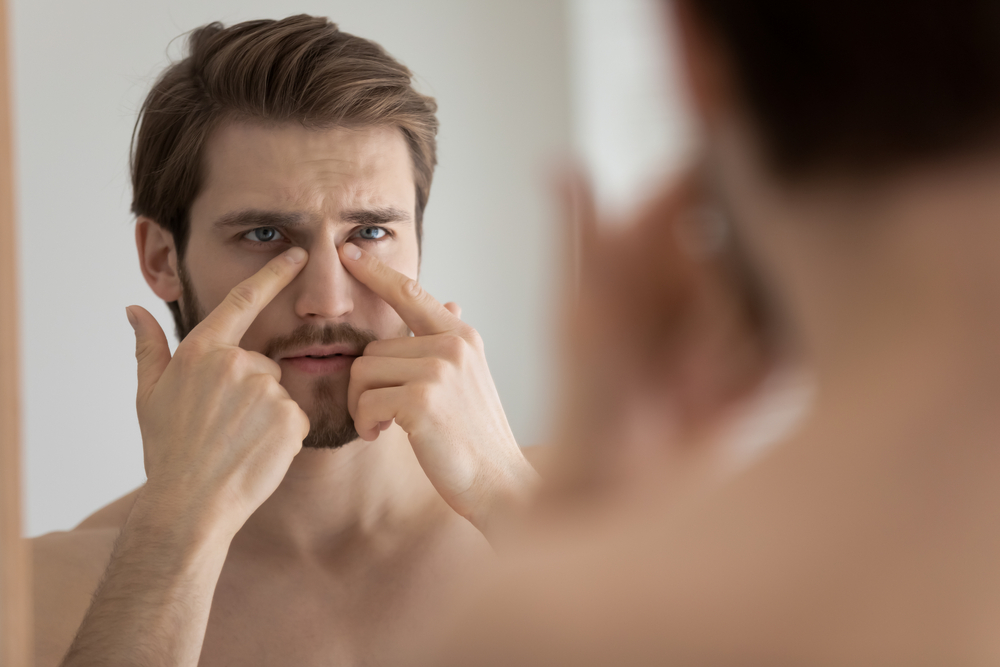
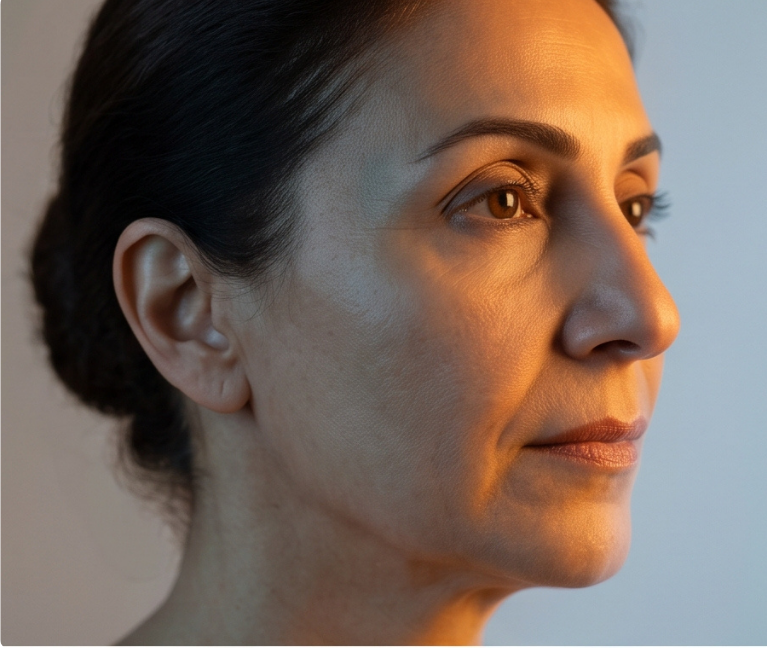
A flushed cheek and a brown patch can look deceptively similar in photos, especially under makeup, which is why so many patients arrive at a consultation asking for “the wrong thing” — not through any fault of their own, but because redness and pigmentation are frequently confused, and the treatments for each are not interchangeable.
Vascular concerns: when it’s about blood vessels
Persistent redness, facial redness, broken capillaries and visible thread veins are vascular in origin — caused by dilated or damaged blood vessels close to the surface. Conditions like rosacea fall into this category too, and while topical creams can calm short-term flare-ups, they don’t address the vessels themselves. Vascular laser platforms, including ADVATx, are built specifically to target oxyhaemoglobin — the pigment in blood — which is why they can treat spider veins, broken capillaries and rosacea-related redness without needing to touch melanin at all.
Pigmented concerns: when it’s about melanin
Sunspots, melasma and general hyperpigmentation are a different mechanism entirely — an overproduction or uneven distribution of melanin, often triggered or worsened by UV exposure, hormones, or inflammation. Because ADVATx’s dual-wavelength technology also targets melanin, the same platform can treat pigmented lesions too, but the settings and approach differ meaningfully from vascular treatment — which is why “one laser for everything” claims are worth being sceptical of unless the underlying technology genuinely supports it.
Why melasma is the trickiest of all
Melasma deserves a special mention because it behaves unlike ordinary sun damage: it’s hormonally driven, prone to recurrence, and can be worsened by aggressive treatment. A cautious, layered approach — sun protection, targeted topicals, and conservative laser settings — tends to outperform anything promising a fast fix. Products such as Mesoestetic’s Melan range are commonly used clinically alongside laser as part of that longer-term management.
Getting the diagnosis right first
The single biggest predictor of a good outcome isn’t the device used — it’s whether the underlying cause was correctly identified before treatment started. A five-minute skin assessment that distinguishes vascular from pigmented (or spots both, since they often coexist) will do more for your results than any specific brand of laser.