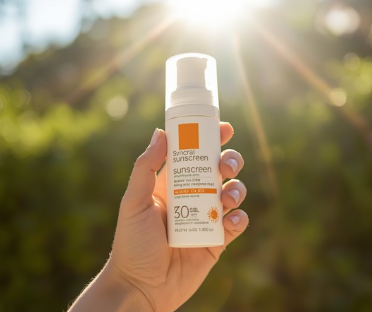
Concern about sunscreen blocking vitamin D production is one of the most commonly cited reasons people give for skipping sun protection, and it’s a genuinely reasonable question rather than a myth to dismiss outright — though the actual research nuances the concern considerably.
How Vitamin D Production Actually Works
Vitamin D synthesis happens when UVB rays interact with skin, and in theory, a sunscreen that fully blocks UVB would also block this process — but real-world sunscreen use rarely achieves the kind of complete, even, and perfectly maintained coverage that laboratory conditions test for.
What Real-World Research Actually Shows
Multiple studies looking at actual sunscreen users, rather than laboratory-perfect application, have found vitamin D levels aren’t significantly different between regular sunscreen users and non-users, largely because most people apply less product, less evenly, and less consistently than a lab test assumes.
Why This Doesn’t Mean Sunscreen Is Pointless for Vitamin D Purposes
The takeaway isn’t that sunscreen has no effect on vitamin D synthesis at all, but that the effect in typical, real-world use is considerably smaller than the theoretical concern suggests, and it’s nowhere near enough to justify skipping sun protection altogether given the well-established skin cancer and ageing risks of unprotected exposure.
A Genuinely Better Solution Than Skipping SPF
For anyone specifically concerned about vitamin D levels, dietary sources and supplementation offer a far more reliable, controllable route than deliberately reducing Sun Screen use, without introducing the cumulative skin damage that unprotected sun exposure causes over time.
Who Might Genuinely Need to Discuss This With a Doctor
People with limited sun exposure for other reasons — those who are largely indoors, live at higher latitudes with weaker winter sun, or have darker skin that synthesises vitamin D less efficiently from a given amount of UVB — may have genuinely elevated risk of deficiency regardless of sunscreen use, and are worth discussing supplementation with a doctor directly rather than adjusting sun protection habits as a workaround.
The Takeaway
If you’d like to explore further, treatments like wrinkle reduction, botox, toxin treatment, collagen production, rosacea treatment and polynucleotides are also worth discussing with your practitioner.
Sunscreen’s theoretical effect on vitamin D synthesis doesn’t hold up as a reason to skip sun protection in real-world use, where application is rarely thorough enough to meaningfully block it anyway. Vitamin D concerns are better addressed through diet or supplementation than through reduced SPF use.