Ozempic Bum: What’s Actually Happening to Your Body
TL;DR: “Ozempic bum” describes the loss of volume, firmness, and shape in the buttocks during rapid GLP-1-assisted weight loss. The cause is a combination of muscle wasting, fat loss, and skin laxity — driven by significant caloric restriction rather than the medication itself. Body contouring and skin tightening treatments can help address the visible results.
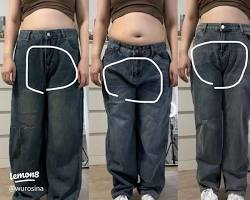
GLP-1 receptor agonists like Wegovy (semaglutide) and Mounjaro (tirzepatide) have transformed how clinicians approach weight management. For many people, they deliver meaningful, sustained weight loss where other approaches have failed. But rapid, significant weight loss — however it is achieved — changes the body in ways that go beyond the number on the scales. “Ozempic bum” is one of the more widely discussed consequences: a visible flattening, deflation, or loss of shape in the buttocks that some people experience as the weight comes off.
The term is informal, not a clinical diagnosis. But the physiology behind it is real, and understanding it matters if you are currently using — or considering — weight loss injections.
Why does GLP-1 weight loss cause muscle and volume loss in the buttocks?
GLP-1 drugs work by mimicking a naturally occurring hormone that regulates appetite and food intake. They reduce hunger, promote fullness, and lead to a significant reduction in caloric intake. That sustained caloric deficit is what drives weight loss — and it is also what drives the problem.
When the body is in a prolonged energy deficit, it draws on both fat stores and lean tissue for fuel. Research published in Nature Medicine (2026) found that around a third of total weight lost on GLP-1 medications can come from muscle rather than fat. Muscle loss on this scale — particularly in the lower body — is what produces the characteristic flattening associated with Ozempic bum. Unlike fat, which the body can rebuild relatively quickly once intake increases, muscle is considerably harder and slower to regain.
The gluteal muscles are especially vulnerable. They are among the largest muscle groups in the body and, for many people, are already undertrained relative to their size. Rapid weight loss without targeted resistance training accelerates gluteal atrophy in a way that becomes visually apparent.
What does rapid weight loss do to the skin?
Muscle loss is only part of the picture. Skin laxity is a closely related concern, and one that affects a broader area of the body than the buttocks alone.
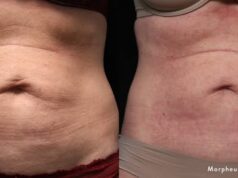
As weight drops quickly, the skin does not always retract at the same rate. The dermis has a finite capacity to shrink and remodel, particularly when the reduction happens over months rather than years. Collagen and elastin — the structural proteins responsible for skin firmness and elasticity — degrade with age and under the pressure of rapid volume change. The result is skin that can appear loose, crepey, or deflated, most noticeably on the abdomen, upper arms, inner thighs, and buttocks.
A review in the Journal of Cosmetic Dermatology noted that skin laxity is one of the most significant aesthetic concerns for patients who experience rapid weight loss on semaglutide, and one that topical skincare alone cannot adequately address.
What can be done about Ozempic bum and post-weight-loss skin changes?
The most evidence-backed preventive measure is resistance training throughout the weight loss process. The NHS recommends at least two strength sessions per week, and adequate protein intake — around 20–40g per meal — to support muscle preservation. These steps do not eliminate the risk of muscle loss, but they meaningfully reduce it.
For those already experiencing the visible effects of gluteal volume loss or skin laxity, there are clinical options worth exploring. Body contouring treatments can help redefine shape in areas affected by volume or tissue loss, while skin tightening procedures address the structural loosening that rapid weight loss accelerates. These are not replacements for a healthy lifestyle, but they can close the gap between where the body lands after weight loss and how a person wants to look and feel.
If you are using or considering weight loss injections and want to understand how to protect your results — or address changes you are already noticing — speaking with a qualified clinician is the most useful next step.
The bottom line
Ozempic bum is a real physiological consequence of rapid, GLP-1-driven weight loss — the product of muscle atrophy, fat redistribution, and skin that cannot always keep pace with the change beneath it. The medication is not the direct cause; the speed and scale of weight loss is. Knowing that means it can, to a degree, be anticipated, mitigated, and managed.
This article is intended as general information only and does not constitute medical advice. Please consult a qualified healthcare professional before starting or changing any weight loss treatment.