When we think of Ancient Egypt, we often imagine grand pyramids, golden tombs, and hieroglyphic-covered temples. But behind the grandeur was a society deeply concerned with health, hygiene, and beauty — so much so that it influenced practices we still follow today.
Far from being vanity, beauty in Ancient Egypt was closely tied to health, ritual, and social status. Whether they were labourers along the Nile or royalty reclining in alabaster palaces, Egyptians believed that cleanliness and adornment were acts of respect for both the body and the divine.
Let’s unpack the surprisingly sophisticated world of Egyptian health and beauty — where makeup wasn’t just decoration and skincare had spiritual weight.
Skincare, the Egyptian Way
Forget synthetic creams or 10-step routines. Egyptians went straight to nature. Their skincare practices were rooted in the environment around them — deserts, rivers, and an unforgiving sun.
Clay masks, often made from red or yellow ochre mixed with water or milk, were used to cleanse the skin and balance oil. Honey, with its antibacterial properties, was applied as a soothing balm. Olive oil was massaged into the skin for softness and shine, while aloe vera — known even then for its healing powers — treated sunburns and minor wounds.
Interestingly, many skincare routines had a medicinal overlap. The line between beauty and healing was blurred. A cracked heel or a dry patch of skin wasn’t just unattractive; it could invite infection or illness. So lotions, pastes, and unguents weren’t cosmetic fluff. They were protective.
Kohl: More Than a Fashion Statement
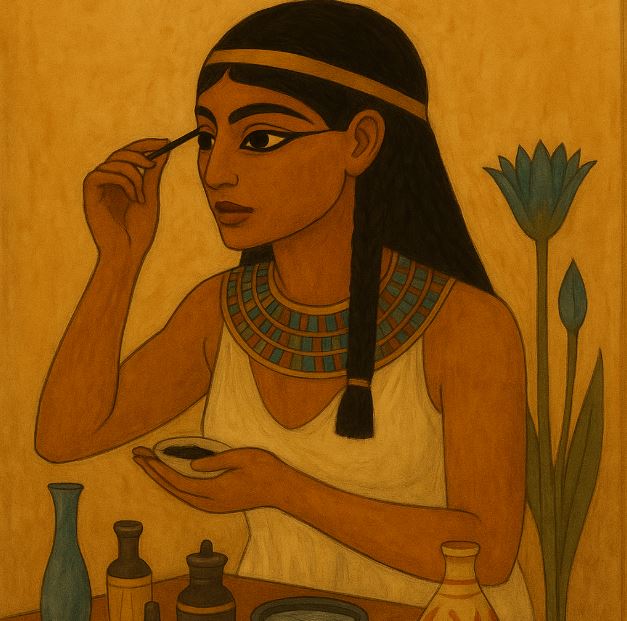
Arguably the most iconic Egyptian beauty ritual was the application of kohl eyeliner. Both men and women painted thick black lines around their eyes — not just for aesthetics, but for deeply practical reasons.
Kohl, made from galena (a form of lead sulphide), helped reduce sun glare, repel flies, and possibly prevent eye infections, including conjunctivitis. In fact, studies have suggested that the trace levels of lead salts in kohl might have had antimicrobial effects, stimulating the immune system to fight infection.
This makes the ancient Egyptians among the first to use makeup as a kind of preventative healthcare — an idea that still echoes in today’s SPF-infused foundations and anti-pollution serums.
Hair Removal and Smooth Skin Obsession
Hair — or rather, its removal — was a serious business in Egypt.
Body hair was considered unclean, and both men and women aimed for smooth, hairless skin. Techniques included sugaring (a sticky paste of sugar, lemon, and water that acted like modern wax), tweezing with bronze tools, and even razors fashioned from copper. Elite women sometimes employed servants solely for this purpose.
It wasn’t just cosmetic. Hairlessness was associated with purity and cleanliness, important in both religious practice and personal grooming. Even priests were completely shaved before entering temples.
Perfume, Oils, and Spiritual Scent
Scent was everywhere in Ancient Egyptian life. It lingered in linen, temples, and skin. Perfumed oils, particularly those containing myrrh, frankincense, and blue lotus, were used daily — not just to smell pleasant but to appease the gods and protect against illness.
Oils also served practical roles: cooling the skin in heat, preventing sunburn, and warding off insects. Workers in the fields might be anointed with castor oil or moringa oil, while the elite had access to exotic blends imported from distant lands.
Perfume making became a respected profession, and recipes were even inscribed in tombs so the deceased could continue their scented rituals in the afterlife.
Beauty as Status, and the Rise of Cosmetic Science
Make no mistake — beauty was also a marker of wealth and class. Elaborate cosmetic palettes, ivory applicators, and decorated jars weren’t just useful tools; they were status symbols.
Cosmetic production was so advanced that many consider Egypt the birthplace of the modern beauty industry. The Ebers Papyrus, dated around 1550 BCE, lists hundreds of ingredients and recipes for treating skin conditions, dental hygiene, hair care, and cosmetics. This wasn’t guesswork — it was a documented, structured approach to personal health.
Funerary Beauty and the Eternal Glow
Even in death, the Egyptians took their beauty routines seriously. Mummies were often found with painted nails, wigs, and jars of cosmetics placed in tombs.
The belief was clear: how you looked in the afterlife mattered. You didn’t just leave your best self behind; you brought it with you.
Cosmetics weren’t trivial — they were sacred. They honoured the body, the gods, and the cycle of life.
What We’ve Inherited
Much of what we now consider modern beauty — from eyeliner and moisturising to exfoliation and perfuming — has its roots in Egyptian ritual. But beyond the tools and techniques lies something deeper: the philosophy that caring for your body is a form of respect.
Whether it was applying kohl to keep the evil eye away or smoothing oil on sun-drenched limbs, Egyptian beauty was practical, protective, and profoundly purposeful.
So the next time you reach for your cleanser or spritz on perfume, consider that you’re participating in a ritual over 4,000 years old.