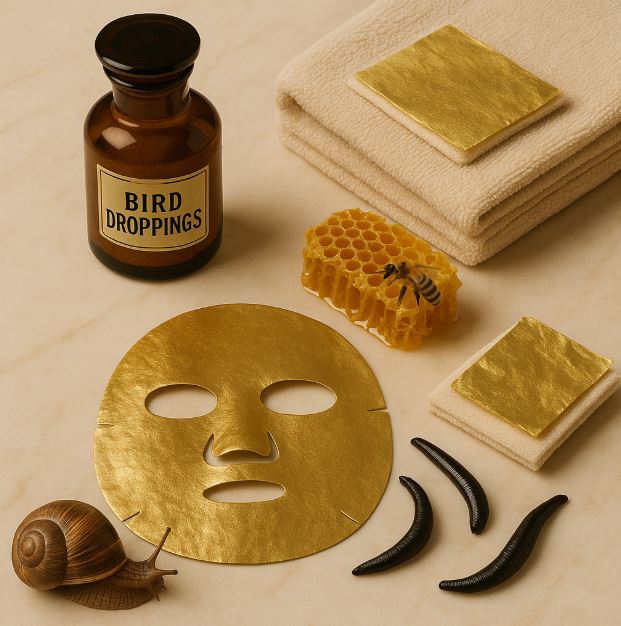
Beauty has never been limited to creams and serums lined neatly on a bathroom shelf. Throughout history and into the modern day, people have sought out unusual methods in the hope of achieving smoother skin, brighter complexions or a more youthful appearance. These treatments range from the luxurious to the outright bizarre, and while some have a basis in tradition, others owe their fame to celebrity endorsement or social media buzz.
Bird Droppings Facial
Also known as the “Geisha facial” in Japan, this treatment dates back centuries. Geisha discovered that powdered nightingale droppings had a natural brightening effect on the skin. The droppings contain an enzyme called guanine, which was believed to gently exfoliate and even skin tone. The mixture was sanitised, dried and ground into a fine powder before being blended with water to create a paste. Modern spa versions retain the concept, offering it as a gentle alternative to chemical exfoliants. Its survival over centuries speaks to the cultural importance placed on pale, luminous skin in traditional Japanese beauty ideals.
Snail Mucin Facial
This unusual treatment involves live snails placed on the skin to glide slowly across the face, leaving behind a trail of mucin. Mucin contains glycoproteins, hyaluronic acid and antimicrobial peptides, which are thought to help with hydration, skin repair and inflammation. Ancient Greek physician Hippocrates reportedly used crushed snails in ointments for skin healing, while in the 20th century Korean skincare embraced the ingredient for its supposed anti-ageing benefits. For many, it offers a natural source of potent actives, and the novelty factor makes it a conversation starter in itself.
Bee Venom Masks
Marketed as “nature’s Botox” in some circles, bee venom masks create a tingling sensation on the skin. Supporters claim the venom triggers a mild reaction that increases blood flow and stimulates collagen and elastin production. This mimics the plumping effect some people seek from injectables, though without needles. Its popularity surged when celebrities endorsed it, especially as a luxury alternative that feels high-tech yet still “natural.” It is often used by those looking for a gentler, non-invasive anti-ageing option, although its effectiveness remains debated.
Fire Facials
In certain spas in China, the fire facial involves soaking towels in an alcohol-based solution, placing them briefly on the skin and then igniting them for a few seconds before extinguishing the flame. Advocates believe the rapid heat boosts blood circulation, opens pores and stimulates collagen production. The practice draws on traditional Chinese medicine concepts of stimulating energy flow, but its dramatic appearance also makes it a spa experience people remember. Those seeking something out of the ordinary often find it appealing, though it is one of the more controversial treatments in terms of safety.
Gold Leaf Masks
Gold leaf masks involve placing thin sheets of 24-karat gold directly onto the skin, often in combination with serums to aid absorption. Gold has been used in beauty rituals since the time of Cleopatra, when it symbolised wealth, divinity and purity. Today, it is marketed as a way to brighten skin, reduce redness and create a luminous glow. For many, the attraction is less about measurable skin benefits and more about the feeling of indulgence and luxury — the idea that a beauty treatment can be as much an experience as a result.
Leech Therapy
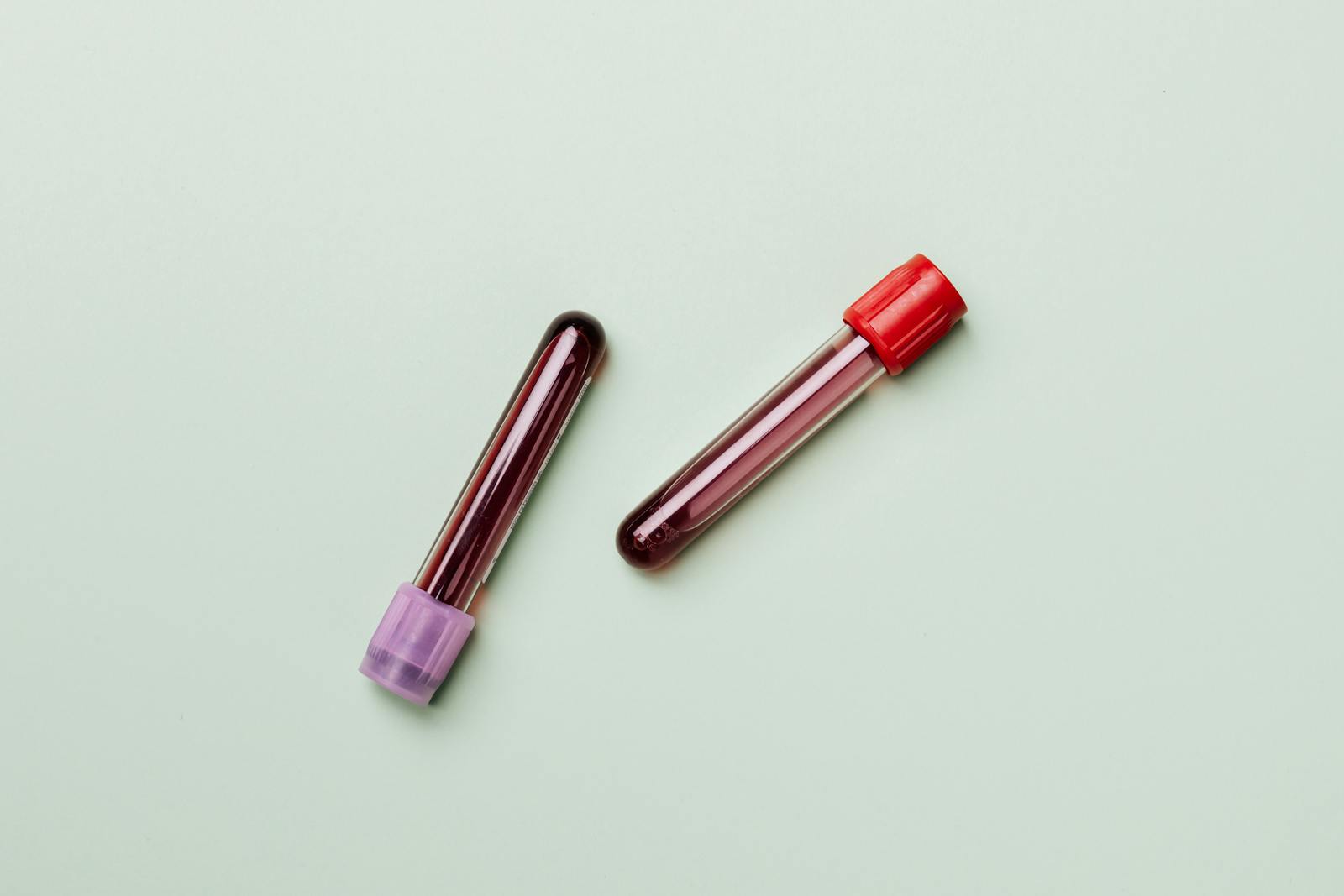
Leech therapy has been recorded for thousands of years, originally as a medical practice to “purify” the blood and balance the body’s humours. In beauty contexts, it is now promoted for its supposed ability to increase circulation and deliver a natural source of bioactive compounds into the skin. Some high-profile advocates claim it leaves the complexion brighter and more refreshed. For many, its appeal lies in its connection to ancient wisdom and the sense of doing something both primal and restorative.
The Allure of the Unusual
The appeal of these treatments often lies in their storytelling as much as in their results. Whether rooted in ancient practices or propelled by modern marketing, they tap into the human fascination with novelty and the promise of transformation. They also remind us that beauty has always been about more than appearance alone. It is a cultural expression shaped by history, science, celebrity influence and personal belief.
For some, the idea of bird droppings, snail trails or burning towels is too much to consider. For others, these treatments represent an adventure — an experience as intriguing as the results it claims to deliver. Beauty may be in the eye of the beholder, but it is also, at times, in the unexpected ingredients and unusual methods people are willing to explore.