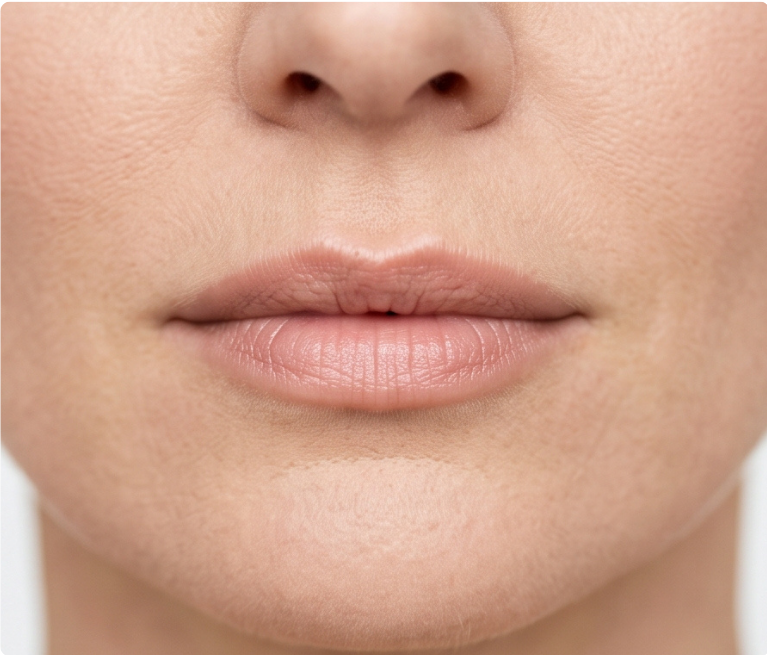
Lip filler is one of the most requested treatments in aesthetics and, unfortunately, one of the most commonly botched — not always through malpractice, but often through inexperienced injecting, unsuitable product choice, or simply an aesthetic that doesn’t age well. The good news is that most complications are entirely correctable.
The most common problem: lumps
Lip filler lumps are usually caused by uneven product placement, swelling settling unevenly, or filler sitting too superficially. Most resolve with gentle massage in the days after treatment, but persistent lumps can be dissolved with hyaluronidase — an enzyme that breaks down hyaluronic acid filler — and re-treated properly once the area has settled.
When lips look overdone
The “m-shaped lips” look — an exaggerated, almost duck-like point to the cupid’s bow — has become one of the most searched lip filler complaints online, usually the result of over-filling the central lip without regard for the patient’s natural proportions. Correction typically means either waiting for product to metabolise naturally or dissolving it to reset and start again with a more considered technique.
The horror stories are real, but rare
Search “filler gone wrong” and the internet will show you the worst-case scenarios — vascular occlusion, severe asymmetry, allergic-type reactions. These are genuinely rare with a competent, medically-trained injector, but they’re a useful reminder that lip filler is a medical procedure, not a beauty treatment to be chosen on price alone.
Dissolving and starting over
For patients who simply want to undo previous work — whether from a bad experience or a change in preference — dissolving lip filler is usually straightforward. Hyaluronidase breaks down the hyaluronic acid within days, after which lips return close to their natural state and any future treatment can start from a clean slate.
Choosing better next time
The single best predictor of a good result is practitioner experience, not product brand. A proper consultation should include a frank conversation about your natural lip shape, realistic volume expectations, and — just as importantly — a clear plan for what happens if you’re not happy with the result.